Understanding Common Payroll Challenges
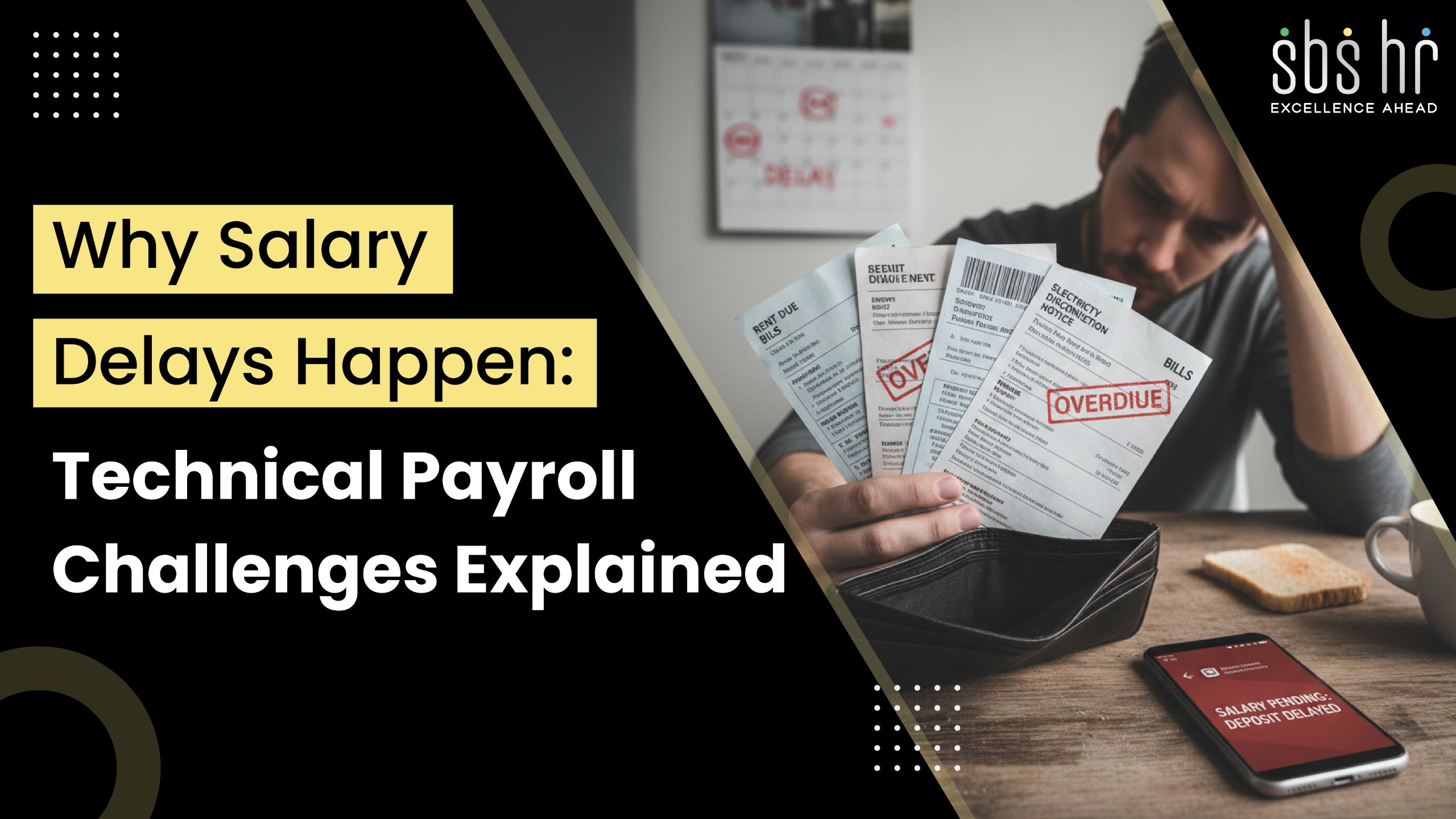
Salary delays can break employee trust, reduce morale, and create a ripple effect of dissatisfaction across an organisation. For employers, however, salary delays are rarely intentional—they are often the result of complex technical, compliance, and operational issues hidden behind the scenes. What looks like a simple “missed deadline” to employees is, in reality, a chain of data mismatches, system failures, manual errors, and compliance bottlenecks that slow down the entire payroll cycle.
Today’s payroll environment is far more dynamic, interconnected, and compliance-heavy than before. Managing payroll manually or with outdated tools drastically increases the risk of delays. This is why more businesses are shifting to payroll outsourcing services and payroll management services provided by trusted partners like SBSHR, ensuring salary accuracy, compliance, and timely credit every month.
Why Salary Delays Really Happen
Employees often assume salary delays occur due to poor planning or financial issues, but the truth is more technical. Most companies struggle with system-related challenges that backfire at the worst possible time.
Common Employee Misconceptions
- The company is facing financial issues
- HR team missed the deadline
- Payroll staff forgot to process salaries
- Management doesn’t prioritise employees
But truly, behind the scenes, the HR team deals with complex data, multiple software platforms, compliance checks, and manual validation—making the entire process time-consuming if not automated.
Fragmented Payroll Data Across Tools
Many organisations use multiple systems that don’t communicate with each other. This causes major data inconsistencies.
Typical Fragmentation Points
- Attendance in one software
- Leave management in another
- Overtime in spreadsheets
- Biometric data not syncing
- Shift rosters updated manually
These mismatches force HR teams into long reconciliation tasks. Even small discrepancies—like a missing punch or unapproved leave—require manual correction. When multiplied across hundreds of employees, it becomes a serious bottleneck.
Excel-Based Payroll – The Hidden Weak Link
Excel has been the default payroll tool for years, but it brings risks that most companies underestimate.
Excel sheets can break easily due to formula errors, wrong references, or data overwrites. Correcting these errors requires hours of tracing and rechecking, especially in multi-tab payroll files.
Common Excel Failures
- Broken formulas
- Incorrect gross/net salary calculations
- TDS, PF, or ESI miscalculations
- Overwriting previous month data
- Errors in generating salary slips
These errors delay salary approvals and disrupt timely payouts.
Compliance Updates That Hit at the Last Minute
Payroll compliance is constantly changing. Companies operating in multiple states face even more complexity.
Common Compliance Challenges
- Minimum wage revisions
- Professional tax updates
- ESI & PF regulatory changes
- Labour welfare fund variations
- Quarterly/annual statutory filings
If the payroll team misses or misinterprets any update, the payroll must be recalculated—pushing salary credit further.
Bank File Errors and Payment Rejections
Even after payroll is finalised, one technical bug in the bank file can delay salaries for the entire workforce.
File Issues That Cause Rejections
- Wrong salary breakup format
- Invalid account numbers
- Incorrect IFSC codes
- File not matching bank format
- Missing mandatory fields
Correcting and regenerating bank files takes time, especially when client-bank integration isn’t fully automated.
Outdated Payroll Software & Limited Expertise
Many companies use outdated systems with no automation or real-time validation. These tools cannot handle large volumes of data or multi-state compliance, leading to slow processing.
Additionally, payroll requires expertise in finance, tax, labour laws, and HR operations. Companies without skilled payroll professionals experience repeated calculations, audits, and corrections.
Why Companies Outsource to SBSHR
To eliminate delays and ensure 100% accuracy, businesses partner with SBSHR’s payroll outsourcing services and payroll management services. SBSHR provides a fully automated payroll ecosystem backed by experts.
How SBSHR Solves Payroll Challenges Issues
- Automated integration of attendance, shifts, and leave
- Zero manual calculation through rule-based engines
- Real-time statutory compliance updates
- Auto-generated bank files with error-free formatting
- Dedicated payroll specialists for every client
- Multi-level payroll audits before finalisation
With SBSHR, organisations eliminate payroll bottlenecks and deliver salaries on time—every time.
Final Thoughts
Salary delays are not caused by poor HR performance—they result from complex payroll structures, manual dependencies, compliance overload, and fragmented data. Without the right systems and expertise, delays are unavoidable.
By outsourcing payroll to a trusted partner like SBSHR, companies gain automation, accuracy, compliance assurance, and a smooth payroll cycle that supports both HR goals and employee satisfaction. With SBSHR’s payroll outsourcing services and payroll management services, organisations eliminate errors, reduce workload, and deliver consistent on-time salary payments.